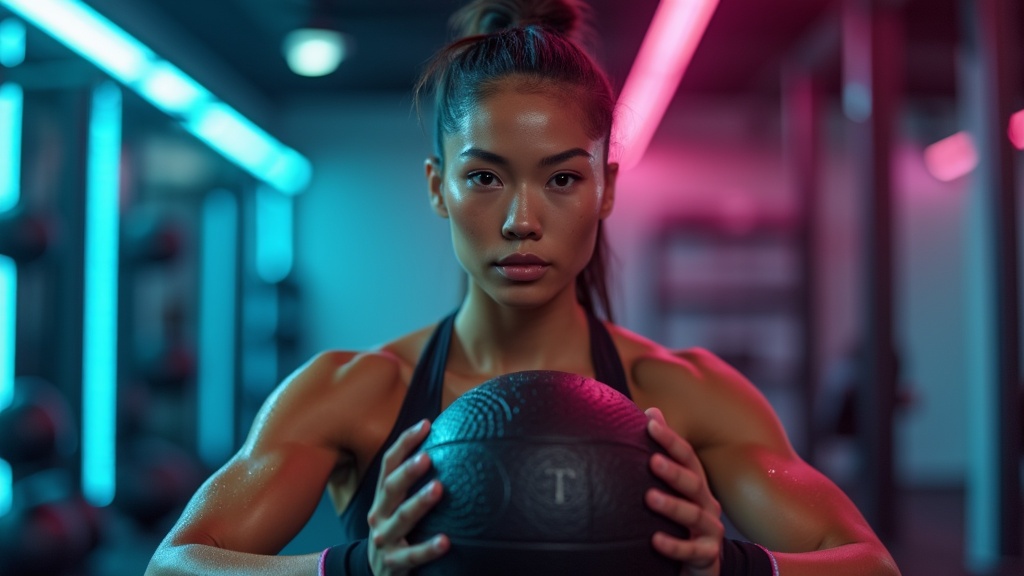

Your AI Trainer Knows Your Body Better Than You Do (Dark Truth)
Your phone buzzes. "Great workout today! Let's increase your squat weight by 5 pounds tomorrow." But here's the thing—that message didn't come from a human trainer. It came from an algorithm that's been watching your every rep, analyzing your heart rate, and calculating your recovery.
Welcome to 2025, where AI personal trainers aren't just a sci-fi fantasy anymore. They're your new workout buddy, therapist, and drill sergeant all rolled into one digital package. But before you fire your human trainer and pledge allegiance to the machines, there's something you need to know.
The AI fitness revolution promises perfect personalization at a fraction of the cost. Sounds too good to be true? That's because it might be. Let me show you what's really happening behind those sleek interfaces and motivational push notifications.
What Is an AI Fitness Coach?
Think of an AI fitness coach as that friend who never forgets anything—except this friend has memorized every exercise science textbook ever written and can process your biometric data faster than you can say "burpees."
These digital trainers use machine learning algorithms to create workout plans based on your goals, fitness level, available equipment, and even how you slept last night. They track your performance, adjust your routines in real-time, and supposedly know exactly when to push you harder or tell you to take a rest day.
The technology isn't entirely new, but what's changed is the sophistication. Modern AI trainers can analyze video of your form, integrate with wearable devices, and even factor in external stressors like work deadlines or relationship status. Some can detect if you're about to plateau before you even know it yourself.
But here's where it gets interesting—and a little creepy.
How AI Trainers Personalize Workouts
Ever wonder how your AI coach "knows" to suggest that specific leg workout on the day your Fitbit shows poor sleep quality? The answer lies in pattern recognition that would make Sherlock Holmes jealous.
AI trainers collect data from multiple sources: your workout history, biometric readings, self-reported energy levels, and even external factors like weather (yes, really—some apps adjust indoor vs. outdoor recommendations based on temperature and air quality).
Here's the process broken down:
Data Ingestion: Your AI trainer is constantly hungry for information. Heart rate variability, sleep duration, previous workout performance, how long you rested between sets—it all gets fed into the algorithm.
Pattern Analysis: The AI looks for correlations. Did you perform better on Tuesdays? Do you tend to skip leg day when stressed? Are you more likely to complete workouts that are exactly 32 minutes long? The machine learns your behavioral patterns better than your best friend.
Adaptive Programming: Based on these patterns, the AI adjusts your future workouts. If your data suggests you recover slowly from high-intensity sessions, it might space them out more. If you consistently perform well with certain exercise combinations, it doubles down on those.
Real-Time Modifications: Some advanced AI trainers can modify your workout mid-session. If your heart rate data suggests you're more fatigued than usual, the app might reduce the intensity or suggest longer rest periods.
Sounds brilliant, right? But here's the catch that most fitness apps won't tell you upfront.
Comparison: AI vs. Human Coaching Outcomes
Let's cut through the marketing fluff and look at what actually works. The research picture is… complicated.
Studies on AI-powered fitness apps show some promising results. Users report 71% better workout adherence compared to traditional methods, according to industry research. The convenience factor is undeniable—AI trainers are available 24/7, never have bad days, and cost significantly less than human trainers.
But here's what the glossy success stories don't always mention:
The Motivation Gap: Human trainers excel at reading the room. They can sense when you need encouragement versus when you need a metaphorical kick in the pants. They adjust not just your workout, but their coaching style based on your mood, body language, and life circumstances. AI can recognize patterns in data, but it can't yet read the subtle emotional cues that make the difference between pushing through and burning out.
Form Correction Limitations: While AI can analyze video footage and provide feedback on your squat depth or bench press bar path, it often misses the nuanced corrections that prevent injury. A human trainer might notice that your left shoulder sits slightly higher than your right—a detail that could prevent future problems but might be invisible to current AI systems.
Contextual Adaptation: Life throws curveballs. Your AI trainer knows your workout history, but it doesn't know that you had a fight with your partner this morning, or that you're dealing with a stressful project at work. Human trainers excel at reading between the lines and adjusting accordingly.
However—and this is important—AI trainers are getting scary good at addressing these limitations.
Limitations and Future Prospects
Here's the truth that might make some fitness professionals uncomfortable: AI personal trainers are improving at an exponential rate, while human coaches… aren't.
Current limitations include:
The Empathy Deficit: AI can simulate motivation, but it can't genuinely care about your success. It can send encouraging messages, but it doesn't feel proud when you hit a new personal record.
Complex Movement Assessment: While AI can spot obvious form issues, it struggles with the subtle biomechanical problems that lead to injury down the road.
Individual Variability: Despite all the data processing, AI sometimes misses the forest for the trees. It might optimize for workout completion rates while missing signs of overtraining or underlying health issues.
But here's what's coming that might change everything:
Advanced Biometric Integration: Future AI trainers will likely integrate with continuous glucose monitors, stress hormones tracking, and even brain activity measurements to create truly personalized experiences.
Improved Computer Vision: Better video analysis will soon allow AI to spot movement compensations and injury risks that currently require human expertise.
Emotional AI: Developments in emotion recognition technology could help AI trainers better read your mental state and adjust motivation strategies accordingly.
Hybrid Models: The future likely isn't AI versus human trainers, but AI-augmented human coaching. Imagine a human trainer with access to all your biometric data and AI-generated insights, combined with human intuition and emotional intelligence.
The question isn't whether AI trainers will replace human ones—it's how quickly they'll become good enough that the choice comes down to personal preference rather than effectiveness.
TL;DR: • AI trainers excel at data analysis and consistency but lack human intuition and emotional intelligence • Personalization is their superpower—they process patterns in your data that humans might miss • Current limitations include empathy gaps and complex movement assessment challenges • The future likely belongs to AI-human hybrid coaching models • If you're tech-savvy and self-motivated, AI trainers can be incredibly effective • If you need emotional support and nuanced guidance, human trainers still have the edge
The AI fitness revolution isn't coming—it's already here. The question isn't whether you should embrace it, but how to use it strategically. Your perfect workout partner might not be human or machine, but a combination of both that leverages the strengths of each while covering for their weaknesses.
The fitness industry is changing faster than your rest day recovery. The smart money isn't on choosing sides—it's on understanding how to make both work for you.
Sources
https://www.sunnysports.com/blog/top-10-fitness-trends-to-watch-in-2025/