
The HIIT Method Everyone's Doing Wrong (Science Revealed)
Your gym buddy swears by burpees and bike sprints. Your trainer keeps talking about "functional movement patterns." And now there's this whole debate about which type of HIIT actually works better.
Here's the thing: while you've been doing traditional HIIT—think 30 seconds all-out, 30 seconds rest—a growing movement is saying you're missing the bigger picture. They call it Functional HIIT, and the claims are bold. Better real-world strength. More practical fitness. Same fat-burning benefits, but with movement that actually translates to daily life.
But is it just fitness industry hype, or is there something here? Let's dig into what the science actually says.
What Is Functional HIIT? Defining the Trend
Traditional HIIT is straightforward: push hard, rest, repeat. Think sprint intervals, bike intervals, or that classic Tabata protocol your fitness app loves. It's simple, measurable, and brutally effective.
Functional HIIT? That's where things get interesting.
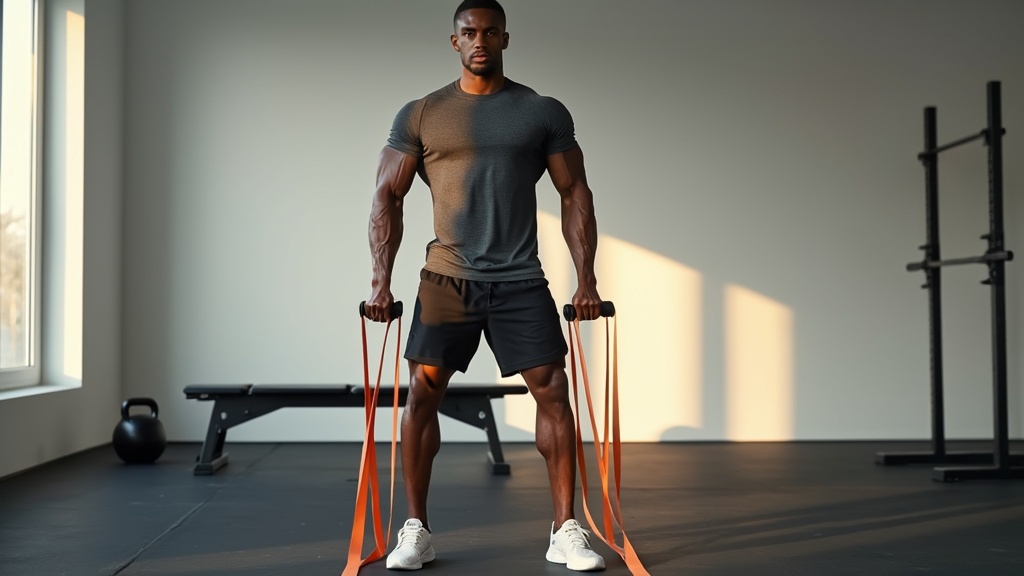
Instead of isolated movements, Functional HIIT combines high-intensity intervals with multi-joint, multi-plane movements that mimic real life. We're talking:
- Farmer's carry intervals instead of treadmill sprints
- Turkish get-ups for time instead of burpee marathons
- Loaded carries, crawls, and rotational patterns
- Movement chains that hit multiple muscle groups simultaneously
The idea? Train your body the way it actually moves in the real world—lifting, carrying, pushing, pulling—but at high intensity.
Sounds logical, right? But here's where most people get it wrong.
Traditional HIIT: Strengths and Weaknesses
Let's be honest about traditional HIIT first. It works. Period.
The research is overwhelming: traditional HIIT protocols improve VO2 max, torch calories, and can deliver similar cardiovascular benefits to longer steady-state cardio in a fraction of the time. A 2019 meta-analysis in Sports Medicine found that HIIT can improve cardiovascular fitness 28% more than traditional moderate-intensity exercise.
Traditional HIIT wins on:
Simplicity: Sprint 30 seconds, rest 90 seconds. Anyone can follow it. Measurability: Track distance, speed, power output easily. Time efficiency: Get in, destroy yourself, get out. Fat loss: The afterburn effect is real—your metabolism stays elevated for hours.
But here's the catch traditional HIIT fans don't want to admit.
Most traditional HIIT happens in one plane of motion. You're running forward, cycling in place, or doing vertical jumps. Your body moves in three dimensions in real life, but your HIIT training? Stuck in 2D.
And here's another problem: traditional HIIT can create movement compensations. When you're gasping for air in minute 8 of a sprint protocol, form breaks down. You develop movement patterns that look nothing like how your body should actually function.
Head-to-Head Outcomes: Evidence from Studies
So which actually delivers better results? The research is still catching up, but early studies are revealing some fascinating patterns.
A 2023 study published in the Journal of Strength and Conditioning Research compared traditional cycling HIIT against functional movement HIIT over 8 weeks. Both groups saw similar improvements in cardiovascular fitness—no surprise there.
But the functional group showed significantly better improvements in:
- Multi-directional movement speed
- Core stability measures
- Functional strength assessments
Meanwhile, the traditional HIIT group had better pure power output numbers.
Here's what this means: if you want to get better at your specific HIIT protocol, traditional HIIT wins. If you want fitness that transfers to everything else you do, functional HIIT has the edge.
But there's a twist that changes everything.
The most interesting finding? When researchers tested both groups on novel movement tasks—things they'd never trained—the functional HIIT group adapted faster and performed better. It's like their bodies had learned how to learn movement, not just repeat it.
Traditional HIIT made people really good at traditional HIIT. Functional HIIT made people more adaptable athletes.
Which HIIT Is Right for You?
Here's where most fitness articles fail you. They try to declare a winner. But the truth? It depends on what you're actually trying to achieve.
Choose Traditional HIIT if:
- You're training for a specific sport or activity
- You want the simplest, most time-efficient fat loss protocol
- You prefer measurable, trackable progress
- You're new to HIIT and want to master the basics first
- You're dealing with movement limitations or injuries
Choose Functional HIIT if:
- You want fitness that transfers to daily activities
- You're bored with traditional cardio patterns
- You value movement quality as much as intensity
- You're looking for a more comprehensive training approach
- You enjoy variety and complex movement challenges
But here's the strategy most people miss: you don't have to pick sides.
The smartest approach? Periodize your HIIT training. Spend 4-6 weeks focusing on traditional protocols to build your high-intensity base. Then shift to 4-6 weeks of functional HIIT to develop movement adaptability. Repeat.
This gives you the metabolic benefits of traditional HIIT plus the movement intelligence of functional training.
TL;DR: • Traditional HIIT: Superior for pure fitness metrics, fat loss, and sport-specific performance • Functional HIIT: Better for real-world movement, adaptability, and comprehensive fitness • Both deliver similar cardiovascular and metabolic benefits • The best approach? Alternate between both every 4-6 weeks • Your goals should determine your protocol, not fitness trends
The HIIT debate isn't really about which method is "better." It's about matching your training to your life. Traditional HIIT makes you really good at going really hard. Functional HIIT makes you really good at moving really well.
The question isn't which one wins. The question is: what kind of fitness do you actually need? Answer that, and your HIIT choice becomes obvious.
Because at the end of the day, the best HIIT protocol is the one you'll actually stick with—and the one that makes you better at the life you want to live outside the gym.