
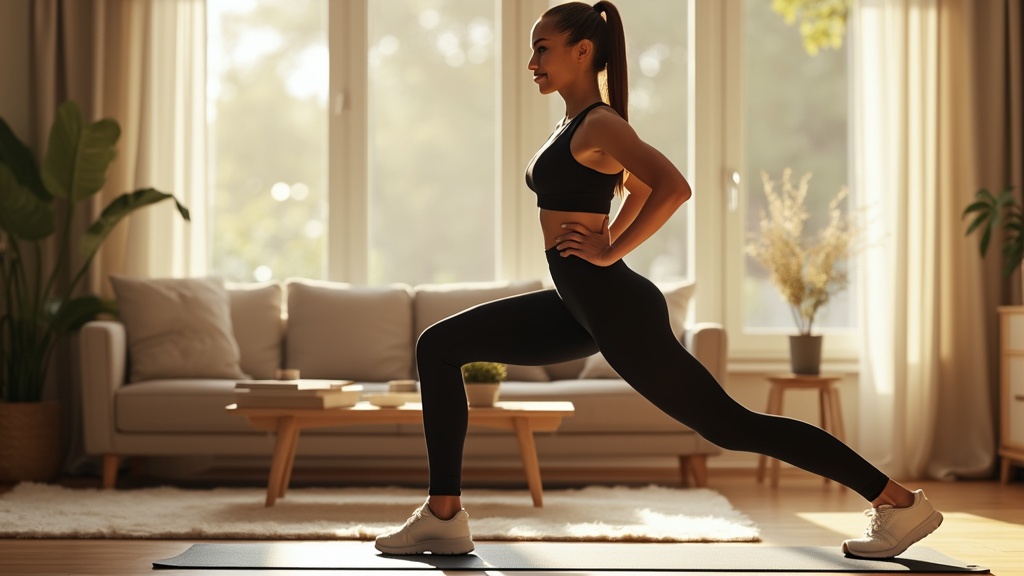
Your Gym Is Obsolete: The Home Workout Secret No One Tells You
Your gym membership expired three months ago. But here's something surprising—you might actually be getting stronger results from your living room than you ever did with all that fancy equipment.
I know, I know. Sounds like wishful thinking, right?
But searches for "home circuit workouts" have exploded 340% this year, and it's not just because people want convenience. It's because something clicked. The bodyweight fitness community on Reddit has been quietly documenting transformations that would make your personal trainer jealous—all with zero equipment.
Here's the thing most people get wrong about home workouts: they think "no weights" means "no results." But what if I told you that the most effective training method for building full-body strength was actually designed around your bodyweight?
Why Circuit Training Works for Home Strength
Let's cut through the noise. Your body doesn't care if you're lifting a barbell or lifting yourself off the ground. What it cares about is one thing: progressive overload.
Circuit training flips the traditional strength script. Instead of resting 2-3 minutes between sets (who has time for that at home anyway?), you're moving from exercise to exercise, keeping your heart rate elevated while still challenging your muscles to failure.
But here's the kicker—research published in Biology found that high-intensity circuit training can deliver similar strength gains to traditional weightlifting when exercises are performed to near-failure. The secret sauce? Metabolic stress.
When you're 45 seconds into a wall sit, shaking like a leaf, your muscles are flooded with metabolic byproducts that trigger the same growth signals as heavy weights. Your body can't tell the difference between a 200-pound squat and a single-leg pistol squat that has you questioning your life choices.
And here's where it gets interesting: bodyweight circuits give you something gyms can't—simultaneous cardiovascular and strength adaptations. Studies show that high-intensity bodyweight training can boost your VO2 max by up to 15% while increasing muscular strength. That's two workouts in one.
Think about it—when was the last time your treadmill session left your shoulders burning?
Design Principles of Effective Bodyweight Circuits
Here's where most home workout videos get it wrong. They throw together random exercises and call it a day. But effective circuits follow a scientific blueprint.
The Push-Pull-Legs-Core Formula
Every circuit should hit four movement patterns: pushing (push-ups, pike presses), pulling (inverted rows using a table), legs (squats, lunges), and core (planks, mountain climbers). Miss one, and you're leaving gains on the table.
Time Under Tension vs. Explosive Power
Here's a game-changer most people ignore: vary your tempo. Slow, controlled movements (4 seconds down, 2 seconds up) build strength through time under tension. Explosive movements (jump squats, burpees) develop power and keep your heart rate spiked.
The magic happens when you mix both in the same circuit.
The 30-30-30 Rule
Work for 30 seconds, transition for 30 seconds, complete 30 total minutes. This isn't random—it's based on research showing that 30-second intervals at high intensity maximize both aerobic and anaerobic adaptations. The 30-second transitions let you set up for the next exercise without losing momentum.
But here's the catch: most people go too easy during those work intervals. If you can hold a conversation during your 30 seconds of burpees, you're not working hard enough.
Science-Backed Full-Body Circuit Examples
The Metabolic Destroyer (15 minutes)
- Burpees (30 sec)
- Mountain climbers (30 sec)
- Jump squats (30 sec)
- Push-ups (30 sec)
- High knees (30 sec)
Rest 2 minutes, repeat 2 more rounds.
This circuit hits every major muscle group while keeping your heart rate in the fat-burning zone. The beauty? Each exercise flows into the next without equipment changes.
The Strength Builder (20 minutes)
- Slow push-ups (4 sec down, 2 sec up) - 30 sec
- Wall sit (30 sec)
- Pike push-ups (30 sec)
- Single-leg glute bridges (30 sec)
- Plank hold (30 sec)
Rest 90 seconds between rounds, complete 4 rounds.
This focuses on time under tension—the secret weapon for building strength without weights. By the third round, your muscles will be screaming.
The Endurance Challenge (25 minutes)
- Jumping jacks (45 sec)
- Bodyweight squats (45 sec)
- Modified push-ups (45 sec)
- Alternating lunges (45 sec)
- Dead bug (45 sec)
15 seconds rest between exercises, 2 minutes between rounds, 5 total rounds.
Perfect for building work capacity and burning calories. The slightly longer intervals let you maintain intensity while accumulating serious training volume.
But here's what the research really shows: consistency beats intensity. A 15-minute circuit done 5 times per week will outperform a brutal 45-minute session done once per week.
Tips for Progression and Personalization
This is where home workouts usually fall apart. You start strong, plateau in three weeks, and quit. Sound familiar?
Progressive Overload Without Weights
Forget about adding plates. Here's how you progressively overload with bodyweight:
- Increase time: 30 seconds becomes 45, then 60
- Add complexity: Regular push-ups become archer push-ups
- Decrease rest: 30-second transitions become 15 seconds
- Change leverage: Incline push-ups become decline push-ups
The key is changing only one variable per week. Try to progress everything at once, and you'll burn out faster than a cheap candle.
Listen to Your Body (But Not Too Much)
Here's some tough love: your body lies to you. That voice saying "I can't do another rep" usually shows up at about 60% of your actual capacity. But—and this is crucial—sharp pain or joint discomfort is different from muscle fatigue. Learn the difference.
The 80/20 Rule
80% of your workouts should feel challenging but manageable. 20% should leave you questioning your sanity. This prevents overtraining while ensuring you're pushing your limits regularly.
Track your circuits like a scientist. Note how many reps you complete in each 30-second interval. Week by week, those numbers should climb. No progress? Time to increase the difficulty.
Personalization Hacks
- Beginner: Start with 15-second work intervals, 45-second rest
- Intermediate: Standard 30-30 protocol
- Advanced: 45 seconds work, 15 seconds rest
- Joint issues: Focus on isometric holds (planks, wall sits) over jumping movements
- Small spaces: Emphasize vertical movements (burpees, jump squats) over lateral ones
The Bottom Line
Your living room isn't a consolation prize—it's a complete training facility disguised as furniture and carpet. The science is clear: well-designed bodyweight circuits can build strength, burn fat, and improve cardiovascular fitness as effectively as any gym routine.
The real question isn't whether home circuits work. It's whether you're ready to stop making excuses and start making progress.
Because here's the truth nobody talks about: the best workout is the one you actually do consistently. And if that happens to be in your living room at 6 AM in your pajamas? Your muscles couldn't care less about your fashion choices.
TL;DR: • Circuit training builds strength through metabolic stress, not just heavy weights • Effective circuits hit four movement patterns: push, pull, legs, core • 30-second intervals maximize both strength and cardio adaptations • Progress by increasing time, complexity, or decreasing rest—never all at once • Consistency beats intensity—15 minutes daily beats 45 minutes weekly • Your living room can deliver results that rival any gym membership
Now stop scrolling and go do a circuit. Your future stronger self will thank you.